Sound Surface Prep
Wash away dirt and mineral deposits, remove loose paint, sand edges, patch defects, and prime bare material. Painting over flaking layers can make the new finish fail within a year.
Common exterior painting mistakes in Phoenix - skipped prep, the wrong coating, and painting in extreme conditions - can turn a durable finish into peeling, chalking, or fading within months. Phoenix Painter Co. has encountered previous paint jobs that failed within two or three years instead of approaching the 7-10 years expected from a quality exterior coating and careful application.
Wash away dirt and mineral deposits, remove loose paint, sand edges, patch defects, and prime bare material. Painting over flaking layers can make the new finish fail within a year.
Use a 100% acrylic exterior formulation rated for UV exposure and thermal cycling, paired with the correct primer. South- and west-facing Phoenix walls can exceed 150°F, so interior or builder-grade paint can fade, chalk, and crack prematurely.
Many exterior paints require surface temperatures between 50°F and 90°F. Follow manufacturer limits, start on shaded elevations, watch temperature and dew point, and allow each coat its full drying and recoat time.
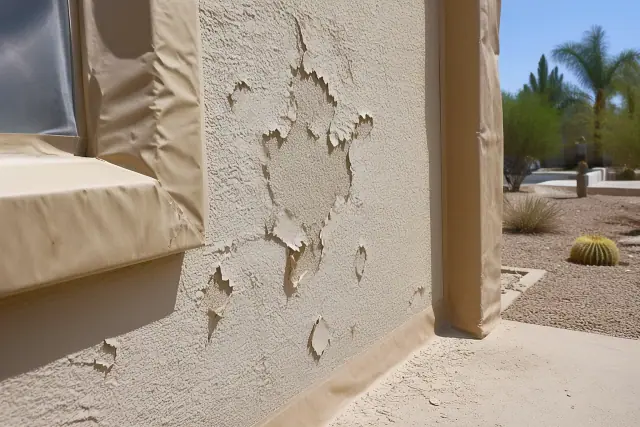
Loose coating lifting from dusty or unprimed stucco reveals a weak underlying bond. A fresh topcoat cannot compensate for an unstable layer underneath.
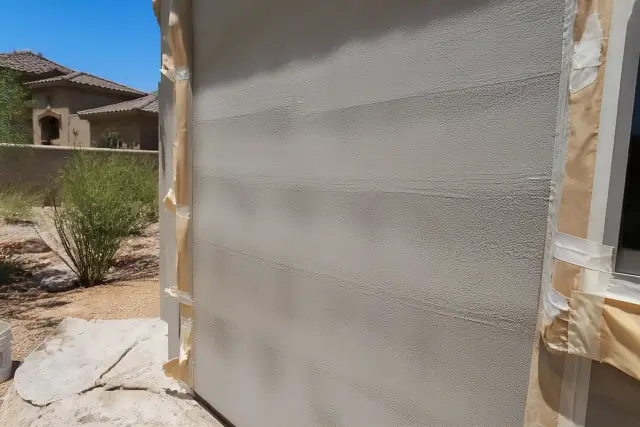
Overlapping bands and uneven sheen often mean one edge dried before the next pass could blend into it. Direct heat can skin the surface before the film beneath cures evenly.
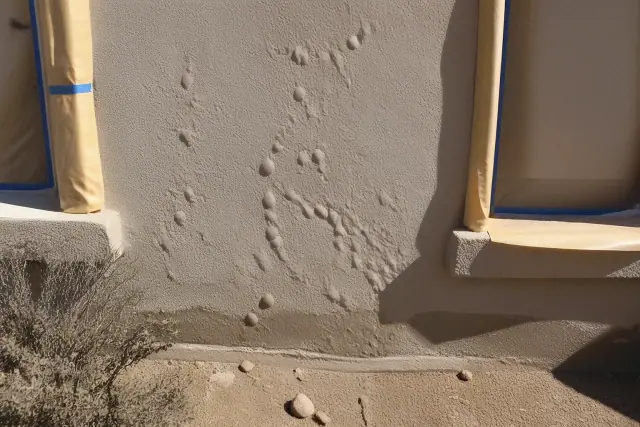
Raised paint bubbles near a stucco crack, siding seam, or irrigation-wet wall point to moisture behind the film. The water source and trapped moisture must be addressed before repainting.
Preparation can account for 60-80% of the labor on a professional exterior repaint because washing, scraping, sanding, patching, caulking, and priming establish adhesion.
Interior or builder-grade products can break down before the 5-year mark and force another repaint every 2-3 years. Bare stucco and block need a masonry primer that handles alkalinity and porosity.
Spring and fall offer the steadiest curing conditions. Monsoon humidity from roughly June through September raises blister risk, while walls can pass 100°F by mid-morning in summer and winter nights can drop below 40°F.
An average residential exterior often takes 3-5 days. Applying too thick causes sagging and slow cure, stretching paint too thin accelerates fading, and recoating early can leave a soft film with poor adhesion.
| Painting Mistake | Likely Symptom | Correction to Confirm |
|---|---|---|
| Painting over dirt or loose coating | Peeling, weak adhesion, or chalking | Wash, scrape, sand, and patch to a sound surface |
| Skipping primer on bare stucco or block | Flashing, uneven absorption, and early wear | Use a masonry primer suited to porosity and alkalinity |
| Painting in direct sun or extreme heat | Lap marks, uneven sheen, or a skinned-over film | Work shaded elevations within the coating's temperature range |
| Trapping moisture behind the coating | Bubbles or blisters | Correct the moisture source and allow the surface to dry fully |
| Applying too thick, too thin, or recoating early | Sags, cracks, fading, or a soft film | Follow the specified film build and recoat window |
Exterior paint performs as a layered system: the substrate must be clean and sound, primer must match the material, and each coat must form a continuous film. Poor prep combined with low-quality paint and bad weather timing can compound into failure within 18-24 months instead of the 7+ years associated with a properly executed job.
More than 300 sunny days a year and a UV index that frequently reaches 10+ accelerate resin breakdown, especially on south- and west-facing walls. Dark, saturated colors absorb more heat and reveal fading and chalking sooner, while monsoon moisture, irrigation spray, poor grading, and stucco cracks can introduce water behind the coating.
For Arizona exteriors, 100% acrylic paint matched to the substrate is a strong baseline, while elastomeric or high-build acrylic can help bridge hairline movement on stucco. Mid-tone and lighter colors generally resist visible heat-related fading better than very dark colors, and an HOA-approved palette should be checked before paint is ordered. After controlled washing, a Phoenix surface may need 24-48 hours to dry before primer; peeling, alligatoring, stucco repair, block preparation, or multi-story access are good reasons to seek a professional evaluation rather than adding another topcoat.
Share the substrate, current symptoms, sun exposure, moisture concerns, and timing of the last repaint. A local exterior inspection can identify failed layers, repair needs, primer requirements, and a workable weather window before a new coating is applied.