Exterior Colors May Require Approval
When the governing documents authorize architectural review, the HOA may approve or deny colors for stucco, trim, garage doors, and shared block walls.
Phoenix Painter Co. explains that a Phoenix homeowners association can control exterior paint colors when its CC&Rs authorize architectural review. Approval usually needs to come before painting, so checking the written rules first can prevent a violation notice, fines, or the cost of repainting.
When the governing documents authorize architectural review, the HOA may approve or deny colors for stucco, trim, garage doors, and shared block walls.
The approved palette and architectural guidelines matter more than a general preference. Vague terms such as "natural colors" can create grounds for a documented appeal when no defined standard is provided.
Keep the approval, submitted color codes, photos, and finished-project documentation together. That record helps if association leadership changes or the completed shade is questioned later.
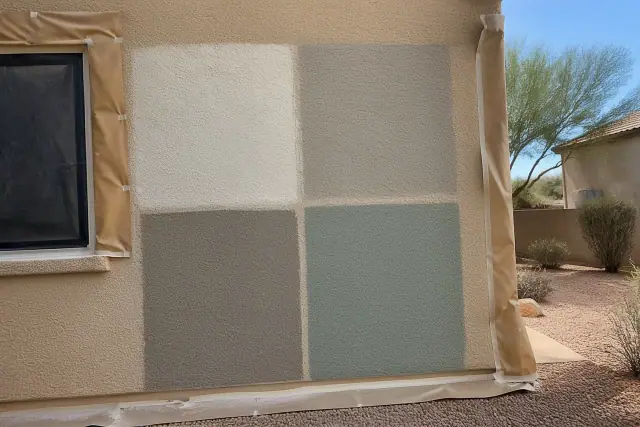
Two or three large test colors on the actual exterior surface. Morning and afternoon light reveal undertones that a screen preview can miss.
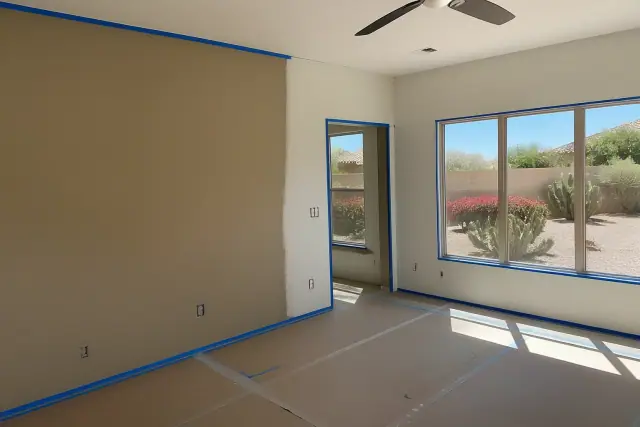
Compare sand, adobe, warm taupe, sage, and soft terracotta with pure black, fluorescent tones, cool purple, and bright primary red. The contrast shows why undertone and intensity matter to review committees.
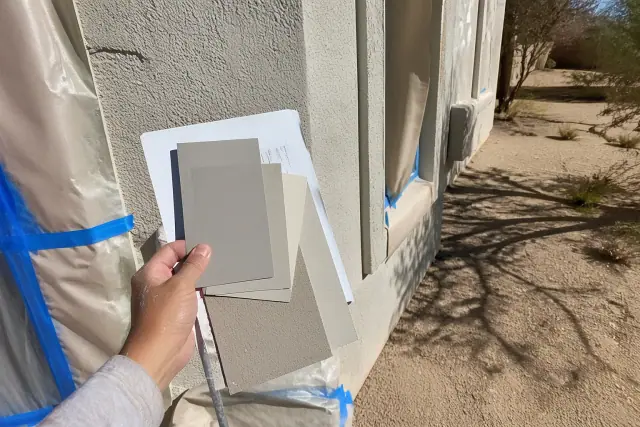
The request form with exterior photos, the product name, sheen, manufacturer color code, and physical swatches. A complete packet reduces avoidable review delays.
Pull the governing documents and architectural guidelines, or request the current approved palette from the management company or ARC.
Approval may depend on the body color, trim or door accent, product code, sheen, and how the shade reads on textured stucco or siding.
Plan on roughly 4 to 6 weeks from submission through a finished repaint when ARC timing and monsoon-season weather delays are included.
Painting first can lead to a violation notice and a required repaint at the homeowner's expense. Written approval is the safest record of the authorized color and scope.
| Situation | What to Verify | Recommended Action |
|---|---|---|
| Planning an exterior repaint | The current CC&Rs, approved palette, and surfaces covered by architectural review | Submit color details and wait for written ARC approval before painting |
| A proposed color was denied | The written reason and the exact standard used for the decision | Appeal or request a variance with approved nearby examples and elevation photos |
| Paint was applied without approval | The violation notice, hearing rights, and whether retroactive approval is available | Respond by the deadline and resolve approval or repainting before penalties escalate |
| The project is interior-only | Whether any painted surface is visible from a street or common area | Confirm the scope; interiors are usually outside HOA color review |
| A palette changed after prior approval | The amendment history and any grandfather provision for existing colors | Keep the earlier written approval and ask how the new rule applies |
Architectural-control clauses are common in master-planned Phoenix communities built since the 1980s, but the governing documents define the actual scope. Exterior stucco, trim, garage doors, and shared perimeter walls are commonly reviewed; interior finishes normally are not. Townhouse and condo projects may also have shared-building standards, including Class A fire-rated coating requirements for some common corridors and stairwells.
A written palette is the starting point, but undertone, sheen, surface texture, visibility, and the size of an accent can change the outcome. Warm greige may clear review where a cool blue-gray does not, and a deep terracotta door may be acceptable even when the body must remain neutral. Phoenix heat, UV exposure, and dust also favor reflective desert tones and compatible coatings. On stucco, coating compatibility matters because expansion and contraction can occur between 70-degree mornings and 115-degree afternoons.
Can an HOA force a repaint? It may require correction when an exterior is faded, peeling, or outside an enforceable standard, and a compliance notice may allow 30 to 60 days under the association's policy. Can it fine a homeowner immediately? A.R.S. § 33-1817 requires notice and an opportunity to be heard before penalties are imposed. How much time and money can the work require? Once the color is approved, a standard single-story repaint may take one to two weeks; an average single-story stucco home runs roughly $3,500 to $7,500 when surface preparation, primer for a color change, and a two-coat elastomeric application are included. A digital color visualizer can narrow the choices, but it does not replace physical swatches on the actual exterior.
Share your HOA guidelines, approved palette, and exterior photos with a licensed Phoenix painting team. It can help prepare large test swatches, organize product and color-code details for ARC review, and document the finished repaint after written approval.